Featured

My First Blog Post

The Dark Reality Shown in Games – Hellblade Senua’s Sacrifice

The story of Hellblade is based on Celtic and Norse mythology and follows the story of a warrior named Senua as she embarks on a very personal journey through a hellish underworld. The studio did a wonderful job at mixing the magnificently rich history of the Celtic and Norse mythology with the right amount of fiction to deliver a breathtaking experience.

Although the narrative throughout this game is predominantly mythology, not only informing players but also allowing them to relive the stories that were heard hundreds of years ago, it is merely seen as a secondary source of information.

From the word go in this game I’m immediately unsettled and nervous. This is due to the constant use of whispers and voices that can be heard. Even though Ninja Theory (creators) knew that these voices would unsettle the players, they still continued to overload headphones with whispers and calls – sometimes heard from different places.

I admire what they’re attempting to show through this game as it isn’t solely about a warrior fighting Gods and getting to Hel, it also focuses on her inner, personal demons. This game has been made to shed light on real issues that real people suffer from each day. Schizophrenia is widely understood as a awful mental illness, however many people dont understand what a person who suffers from it may feel like. Hellblade portrays this extremely well, showing her inner hurt as well as her delusions.

Thus, in conclusion, Ninja Theory created two very well thought out and researched narratives, and managed to create a masterpiece of a game, as well as informing players on mental illness.
Specialism Design – Brief 3 (Level Design) Pt 3

Game build in Unity

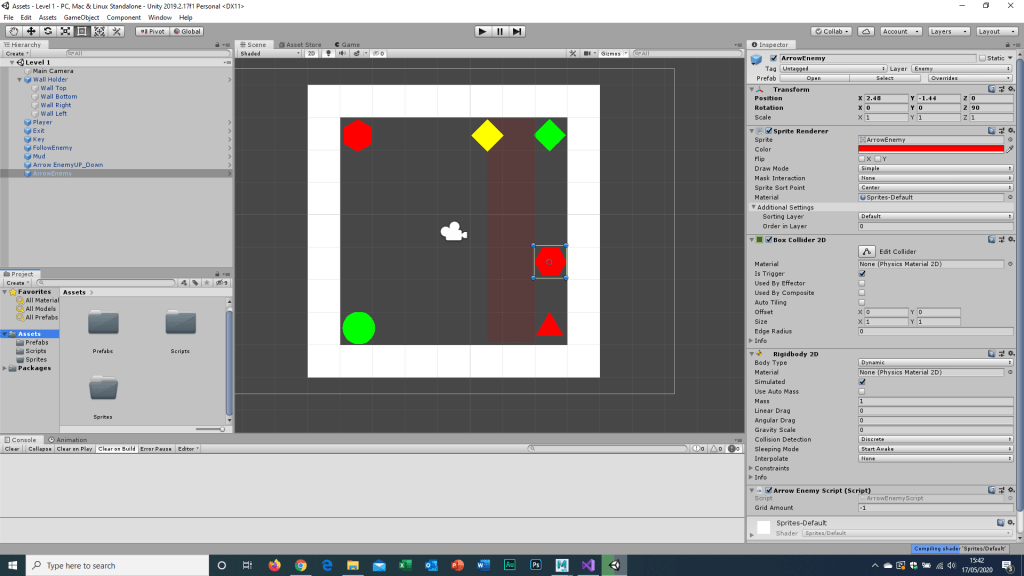
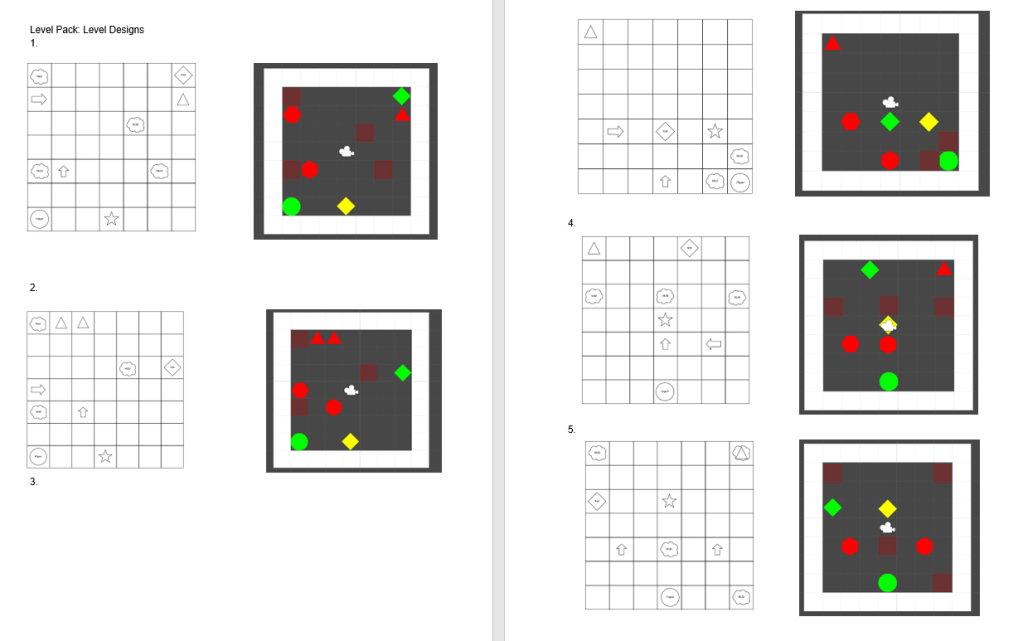
As you can see I have not only designed my levels out on paper, but I have also make a working mechanical demo of the game itself. This took a lot of effort with a lot of help from coding experts on Youtube and the Unity Forum (very helpful sites when doing projects). Once I was able to build this demo the first thing I did was make the level provided. Not only was there no possible winning outcome, the player couldn’t move more than three times before coming into contact with an enemy. In order to fix this I had to get rid of one of the triangular enemies, which allowed me to win the game (and will allow other players to win it too).

Reflection:

This Brief taught me a lot of things. One of the main things it taught me was not to follow every single instruction like a trained animal, but to have my own thoughts and ideas. If a senior designer had given me that brief and found out I had done it and not changed the design of the level, only to find out there was no way of winning the level, it wouldn’t be his fault but it would be mine for not realising sooner. Therefore, I have learnt that in order to progress and further extend my knowledge of Game Design, I must first learn to trust myself and be more confident in myself to change aspects of the design if it is wrong, even if the task has been given to me by the highest member of the team. Furthermore, this brief can definitely be crowned the hardest one out of the three in the aspect of building a demo. Even though the brief itself (design a pack of ten levels) does not seem that hard, building and creating this game is, without a doubt, the toughest bit of mechanics I have ever dealt with. On the other hand, if I do not attempt these types of demos and creating these games, I would not expect to learn how to do them. Thus, this brief has taught me a lot, and even though I might not have enjoyed it as much as the other two, I certainly feel as if it’s furthered my knowledge in this field.

Specialism Design – Brief 3 (Level Design) Pt 2

New Obstacle = Mud / Ice / Goo / (Anything Sticky / can be used to slow player down)

Effect of Obstacle = to Slow the player down, to do this we must add something (Mud) that makes the player move one space instead of the ability to move 2 spaces. Once in the Mud the player will only be able to move one square for (x) amount of turns

Effect on Player = This new obstacle may make each level more tense, due to only having their spaces to move cut in half. This will allow triangle enemies time to catch up to player, making it more of a challenge.

Design Problems = provided design above was physically impossible to win the game. I had to change the design completely to make it playable. I had to remove one triangle enemy due to the mechanic being ‘too overpowered’ (following the player) if two follow a player from either direction, the player will always be caught, especially with new obstacle. 

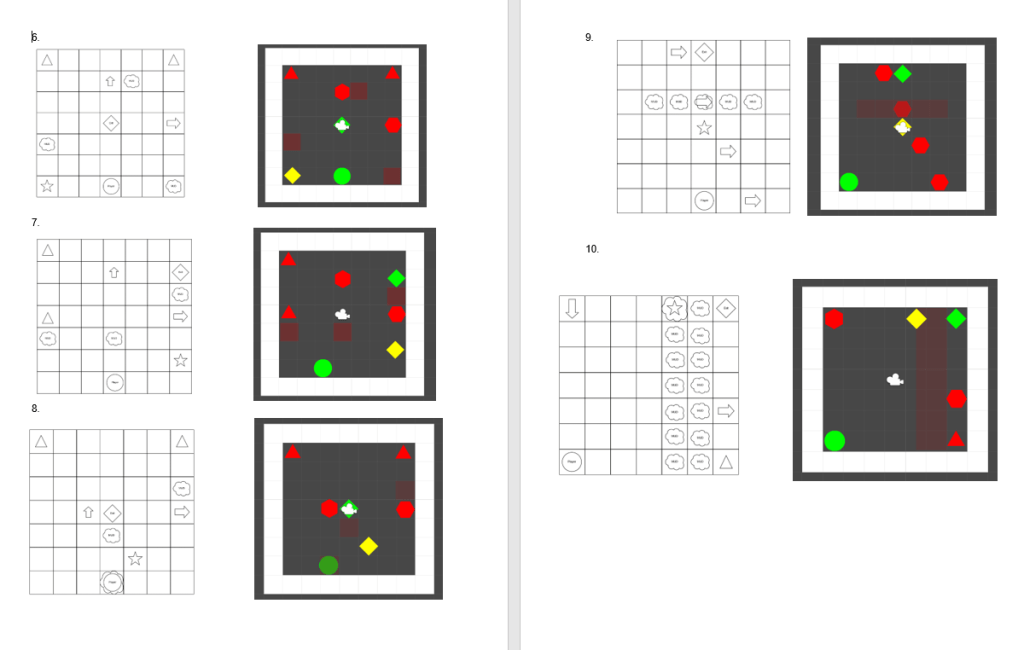
These are all of the ten levels I created for this game. I have added in my obstacle and have tested each level to see if the player can actually win the game (they can win the game in every single level). Some levels are much easier than others, this might be due to the fact that to begin with, the level provided was impossible (no hyperbole used). Find out how I knew it was impossible to win in the next post.

Specialism Design – Brief 3 (Level Design)

For my last brief all I had to do was create 10 levels for a puzzle game (easy right?) I have to introduce a new obstacle to make the game more interesting for the ‘ad-hungry players’. The puzzle game has already been made along with a couple obstacles already in there:

How the game works

Not so easy now! – whilst keeping the game at its similar, playable self, I had to add something new to the game. This would be quite tricky seeing as I can’t change the fundamentals of the game itself.

My thoughts for a new obstacle were not limited and I thought of the endless possibilities I could add to this game. Although many people would think to add a new enemy that does different things to the already existing (tame) enemies, my thoughts differed. I thought that two types of enemies on a 7×7 grid would be more than enough to keep the players on their toes. Thus, if I am not going to add a new enemy – what can I add?

When I see the word ‘obstacle’ I don’t think of enemies, I think of objects. Therefore, my idea was to add something to a square that if the player was to walk onto that square, the object would effect them somehow. During my youth I used to play a game called stuck-in-the-mud, this game would direct me into creating this obstacle.

Concept Level Design with new obstacle

As you can see I’ve created a concept level design of the game with the addition of my new obstacle – Mud. The new addition will affect the players moves. The player has the ability to move two spaces to the enemies one, which inevitably gives the player an advantage over the enemies. However, once the player has gone through the mud, their spaces to move will go from 2 down to 1, therefore the player and enemies will have the same amount of moves, surely causing the player to think again about their moves. This obstacle makes the game more tense – with the option to make additional obstacles that act similar to the mud (e.g. Ice – freezes player for one move, Gloop – player can’t move for one move etc.)

IPP

Theme

As stated previously, in my opinion a good theme is imperative to the appeal of a game. In order to establish a good theme I had to think what would catch peoples eyes. I came up with a few answers: colours, interesting objects, fun environment.

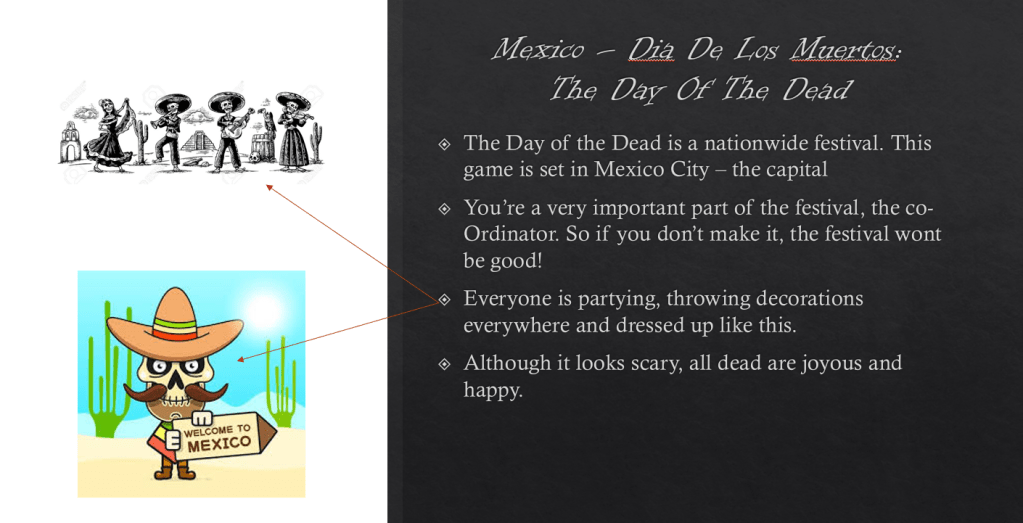
With these in mind, I had thought about using a festival as a theme and setting for this game. The most interesting festival that hasn’t been seen in games might be Mexico’s ‘Day of the Dead’ festival – having an array of different vibrant colours, wacky costumes and a fun atmosphere.

With an interesting theme in mind, a core mechanic established and the gameplay settled, I could start to create the game.

Characters

My character has to be one that people enjoy watching and playing as. Sticking to the main theme of this game I decided to go for a classic object you’d see when searching for images of the day of the dead.

My Character

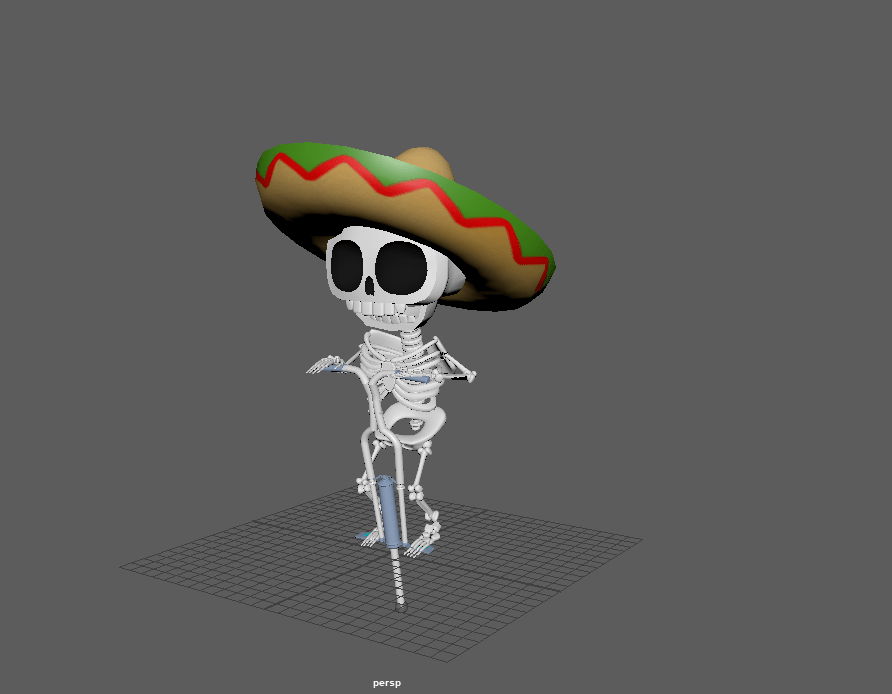
This is my character i have created for my game. The Pogo stick, body and hat were all separate assets which I had to combine to create it. I also had to create joints and rig the character to make him look like he’s riding on the Pogo stick – this was by far the most difficult thing I have had to learn across all the modules (even though I didn’t necessarily have to do it). Even though it proved to be extremely difficult to make, I am immensely happy with the way it turned out and am looking forward to seeing it in action!

I also have plans to create a Mariachi band just for the background scene as well as decorations and buildings.

Industry and Professional Practice (IPP)

For this module I had to create a mechanical demo and pitch for a mobile game of my choosing.

El Pogo Loco

My mobile game would be similar to some mobile games that are very popular, with one difference – the theme.

Gameplay

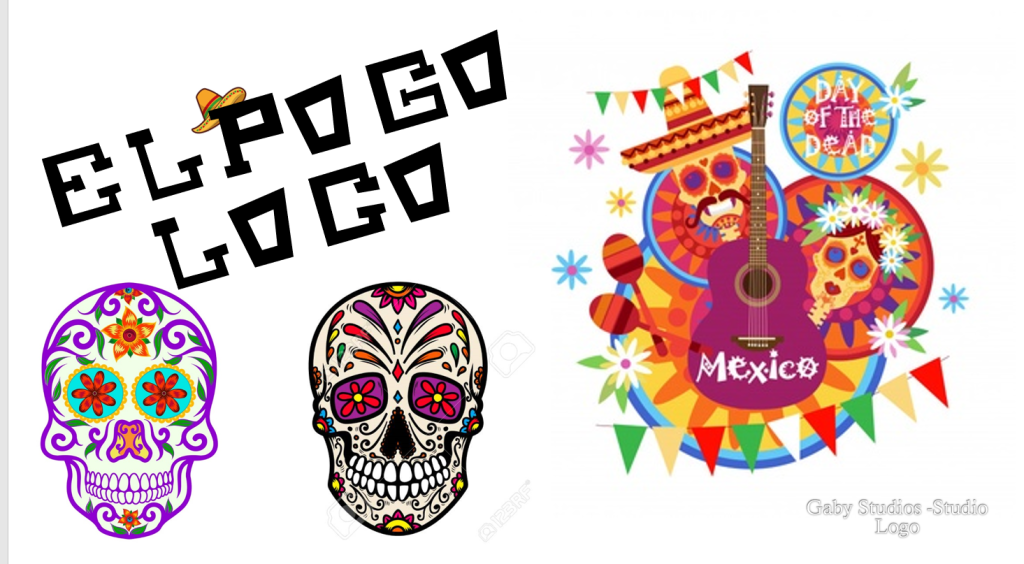
I believe that the theme for any game is by far what appeals most to users. Without any aesthetic in a game, there isn’t much that can catch the users eye. A game with a catchy name, cool and colourful logo and an interesting theme would be picked over a game with bland colours.

Of course, the mechanic of the game and the game-play itself have to be interesting and enticing. With this in mind, I thought that a game that has similar game-play to the popular mobile games (Temple Run, Subway Surfer) would be picked over any new game.

However, the key is to not completely copy these games but just make it like them. The game-play would be an endless runner, but in order to make this game different I would have to add a mechanic to it. This is where I came up with my games core mechanic:

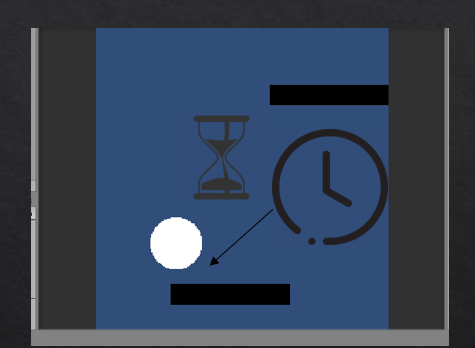
Timed-Tapping

This mechanic would introduce ‘Timed-Tapping’ to the endless runner gameplay. Having a fresh mechanic is imperative because even though a game can be downloaded due to its colours and aesthetics, the game itself has to be fun and unique. Adding in times-tapping makes this game different from others.

3D Environment Pt 2

Building the Scene

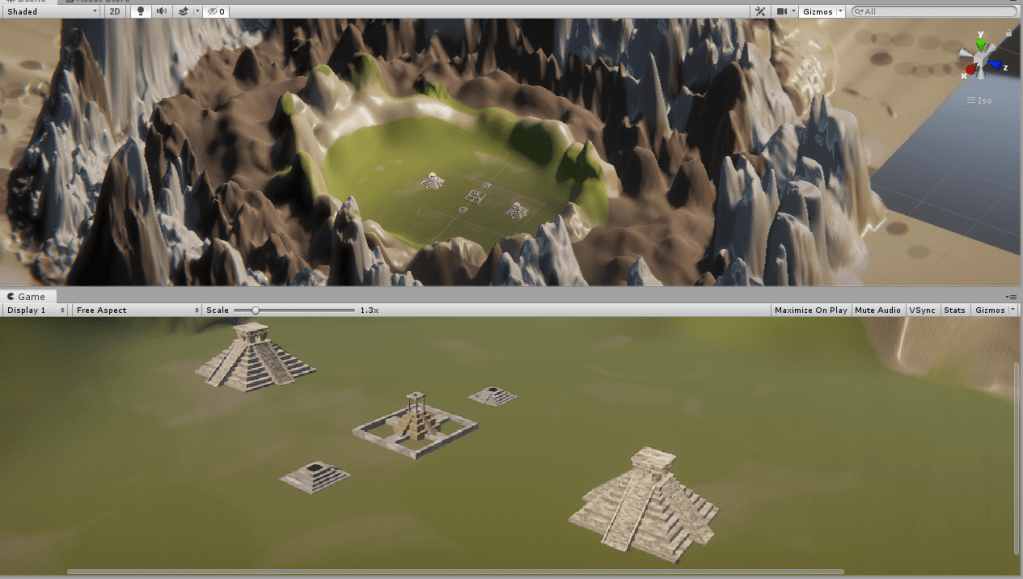
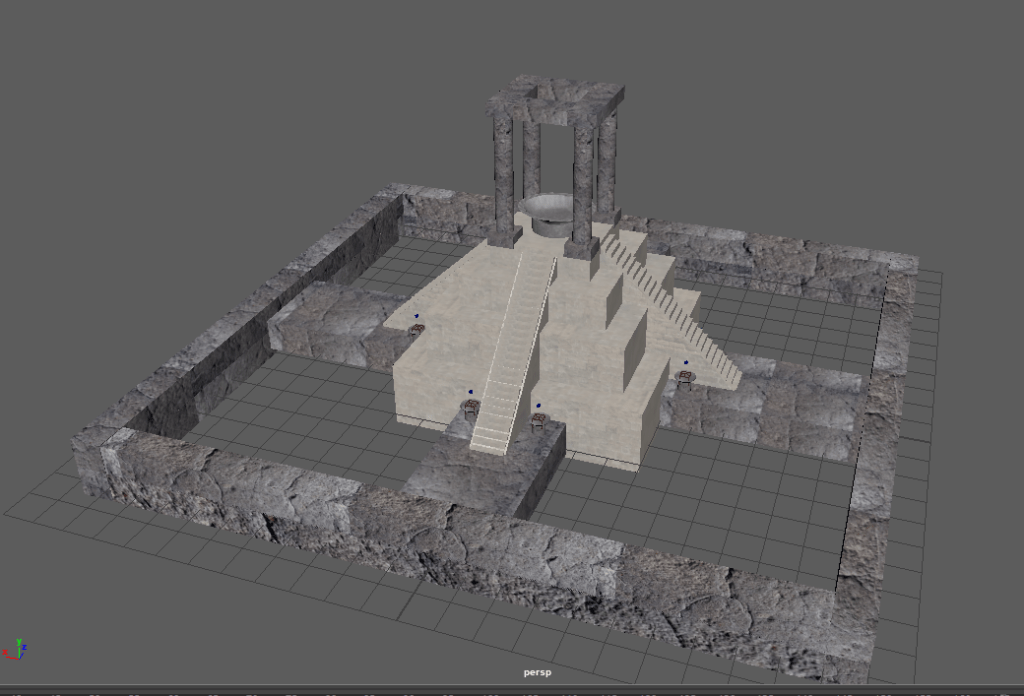
Once the modelling of each building was done I could then start to add them into my scene. To do this I would have to use Unity. Luckily, my teacher posted a video of how to create a scene in Unity and import the objects I had made in Maya into it. Once I had done that and successfully added them to Unity (with the textures attached to it – more difficult than it sounds) I could start to arrange them to look like an environment.

Firstly, before I added the objects into the scene I had to create the scene itself. I chose to use mountains and hills as the background of this scene in order to create an isolated atmosphere. This was to make it look like the environment was in the middle of nowhere, something I had to do to allow the scene to make sense (a sacrificial altar cannot be in the middle of a city). When the mountains had been added, raised/lowered and smoothed, I then had to add ground texture (grass, rock, mud etc.)

When the environment was made without the objects, and I was happy with the way it looked, I could then finally add my models and arrange the scene.

Final 3D environment scene

After creating an animation for the camera – making it move through the scene showing the objects in a personal way, I was finished with this project.

3D Environment

For this project I was tasked to create a whole 3D environment.

Thoughts

When I was given this task I firstly had to think about what I want my environment to be. the idea actually came to me whilst I was scrolling through my camera roll. I had stumbled upon a picture taken almost 10 years ago when i was on holiday in Cancun. Behind me was Chichen Itza, a Mayan Pyramid. I can remember loving its design and thinking that doing ancient Egypt pyramids would be too easy. This lead me to my idea of my 3D environment.

In order to recreate this I had to think of accompanying buildings to go in my scene. I did some research and found little pyramids with holes in the middle. These will become my other 3D models. Lastly, I had to think of a centrepiece – something so interesting that it takes the viewers eyes away from the amazing, large pyramids. This lead me to think of a sacrifice altar. The flames around it and in its centre would surely make it a spectacle.

Modelling

With only having a few weeks of practice to learn 3D modelling in a class it’s safe to say I was a novice at it. But you have to start somewhere and there are lots of tutorials online as well as some provided by my teacher.

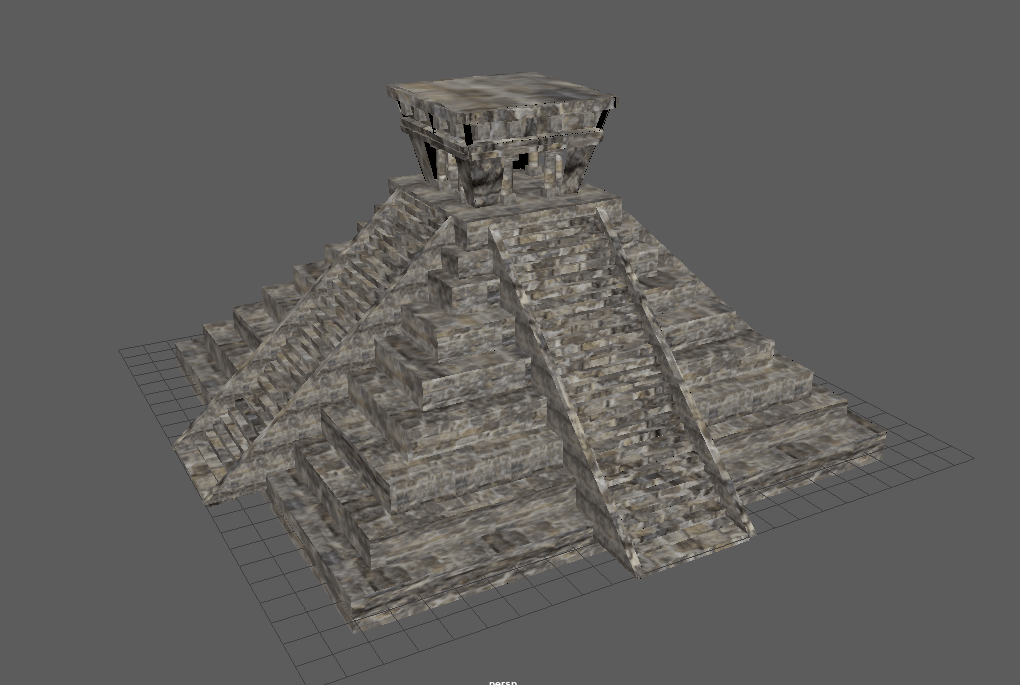
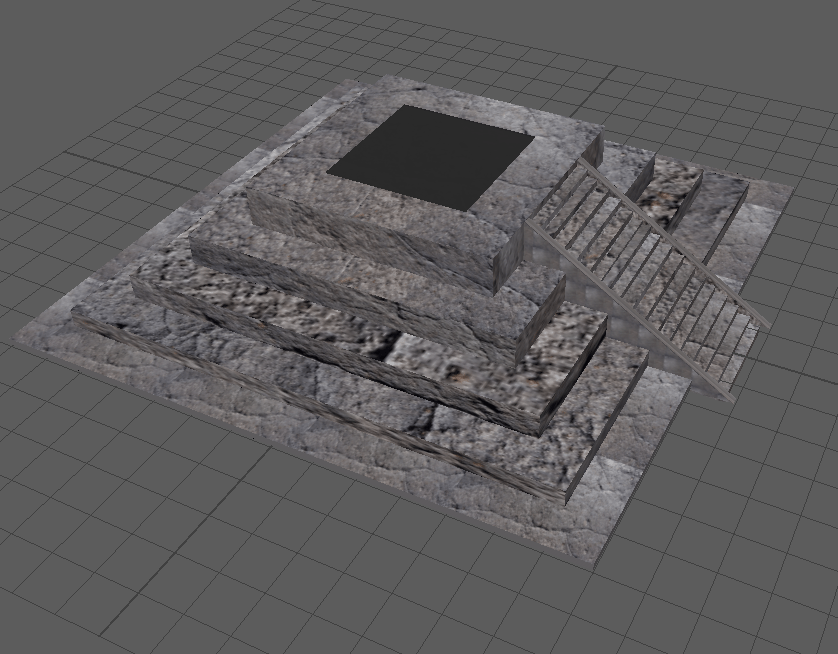
These are all the models separately:

Mayan Pyramid
Accompanying Little Pyramid
Sacrifice Altar

With all these models made and with the textures added to make them look more realistic, I was ready to create the scene.

Specialism Design – Brief 2 (No Graphics) Pt 4

Creation of Game

There were a few problems which I had thought about before I started creating the demo of my game.

These problems had to be sorted out before I could begin the process of building this game. The first problem being my experience with sounds and implementing them in a project. This problem was quite daunting as I was about to make a game that’s only sounds and I didn’t even know how to use them! – I managed to fix this by watching tutorials and learning the old fashioned way.

The second problem is reoccurring due to there being assets used to make the base of the game. In order to overcome it, I would have to find a way to black-out the screen once the player has commenced the game.

Lastly, the third problem was an obstacle I had to face at the beginning of my creation process. Due to the time constraints I didn’t have time to create a whole 3D building with multiple rooms and mechanics. Thus, I decided to create a 2D map but use 3D sounds to make it feel like the player is in a 3D environment.

With all these problems fixed I was able to begin creating the demo for this game with no art.

Build of the game

Reflection

To begin with this brief was extremely interesting and got me to think outside the box. My first thoughts going into this brief was relief due to the fact that I didn’t have to worry about what art to put in. However, that relief soon diminished as I was faced with a lot of other problems and thoughts. To do a game without art is like doing half a game, art makes a game aesthetically pleasing and entices the player to want to play the game, without it I felt as if the game was only half done. On the other hand, I really enjoyed thinking about ways to create a whole game without half of it (art), and was surprised at my outcome and mechanics. During this brief I have learnt a lot about sounds and how to implement them in games and will certainly be implementing more and experimenting with them in the future. Overall I would have to say I really had fun thinking of and creating this game and hope you find the idea as interesting as I did.

Specialism Design – Brief 2 (No Graphics) Pt 3

Problems

A problem with choosing a genre and narrative to go with this game is that due to it having no art, creating a sense of atmosphere and a way to convey what’s happening may be difficult to fabricate. In order to do this I had to carefully select and implement specific sounds to portray atmosphere and setting.

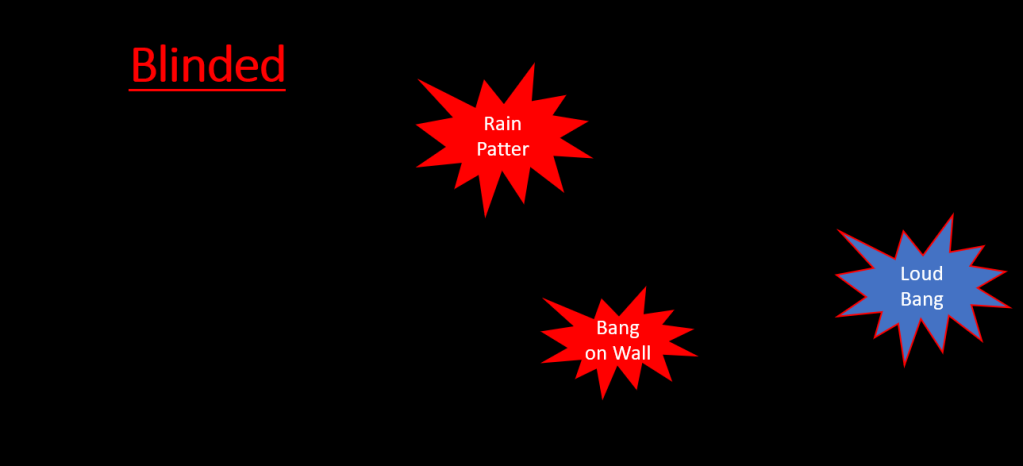
Sounds chosen to convey atmosphere

During the design for this game I had found that in order to conform to the horror genre this game had to build a sense on tension. To do this the sounds would have to overlap each other and overload the player with sounds. An example of this being done in my game would be when the player is walking: Sounds of footsteps, heavy breathing, the walking stick tapping on top of the background noise of a storm, rain patter on the windows and at times glass shattering. The overload of sound would stress the player and create the horror atmosphere using sound alone.

All other sounds were implemented with the notion to disorientate the player and add to the atmosphere. Some examples could be: doors opening and closing and the beeps of the blind objects (GPS, key finder etc.)

Issues with design of game

These issues would come up constantly and I’d have to find a way to overcome some of them. Most coming in the creation of the game.

Specialism Design – Brief 2 (No Graphics) Pt 2

The Game

Without the art to worry about I could only focus on a few things: Design, Game mechanics and possibly Narrative (although I wouldn’t go fully into depth)

The first thoughts I had once I chose this Brief was ‘what does no art mean’ – Art is a thing to make the game look good, so if the art it for looks, what else is there? This lead me to look at the other senses we possess (smell, touch, hear etc.) and what ones I could use for a game. Hearing is the only realistic sense I could use for this game. If I couldn’t use art for a game meaning it can’t look nice, I will just have nothing to see.

Blinded

This brought me onto my idea for my game with no art – Blinded. This game would allow players to use a different sense (Hearing) instead of sight like any other game. This game will use sound and only sound to direct the player and allow them to play this game. In order to do this I had to come up with a narrative which would explain why the player is staring at a blank screen.

Blinded – a horror game where you wake up blind and have to find your way out by only using your ability to hear.

The first obstacle I had to overcome would be how to use the sounds in the game to my advantage and guide the player to freedom. To beat this I did some research into objects that aid blind people in every day life.

All objects in-game

This research lead me to create the objects needed to help the player get through the game. These objects are all real life objects used to help blind people in everyday life and now they will be used in my game – from a walking stick (simply a ticking sound while walking to show when the player has hit a wall) to object locators and key finders (used to find keys to doors) The research into these objects fascinated me and made me believe that this game could be playable.

Design a site like this with WordPress.com
Get started